Belém, a historic district in Lisbon, is a must-visit destination for any traveler. Known for its iconic World Heritage monuments like the Jerónimos Monastery and Belém Tower, the area is brimming with cultural significance. But beyond the well-trodden tourist paths, there are many lesser-known but fascinating stories and curiosities that add depth to your visit. These hidden gems not only enrich your experience but also provide a deeper connection to the history of this remarkable district.
Let’s take a closer look at some of Belém’s most intriguing curiosities!
1. The History of Belém as a Municipality
While many people associate Belém with Lisbon, it was actually once an independent municipality. In 1852, as part of an administrative reform, the Concelho de Belém (Municipality of Belém) was created, separating it from the larger Termo de Lisboa region. It remained a separate municipality until 1885 when it was officially incorporated into Lisbon.
Belém’s first mayor was the celebrated writer Alexandre Herculano, whose tomb can still be found inside the Jerónimos Monastery. A symbol of the former municipality, the Coat of Arms of Belém can still be seen today on a wall between the famous Pastéis de Belém bakery and the Jerónimos Monastery.
2. Beco do Chão Salgado: The Alley of Salted Ground
One of Belém’s most curious street names is Beco do Chão Salgado, which translates to The Alley of Salted Ground. This street holds historical significance tied to a controversial moment in Portugal’s history.
The Marquis of Pombal, one of Portugal’s most influential figures, played a pivotal role in the Távora affair of 1758. This event followed an assassination attempt on King Joseph I, which led the Marquis to accuse the influential Távora family of plotting the attack. The family was swiftly tried and executed, and their palace, located where Beco do Chão Salgado is today, was destroyed. In a symbolic act of vengeance, the Marquis ordered the ground to be salted so that nothing could grow there, and it is said that a monument now marks the spot where “no building shall ever be erected.”
3. The Lisbon Rhinoceros: A Royal Pet
You may have noticed the small sculpture of a rhinoceros near the Belém Tower, but did you know the fascinating story behind it? The rhino became a symbol of Portugal’s Age of Discoveries and was once the beloved pet of King Manuel I.
In 1514, Afonso de Albuquerque, the Portuguese governor of India, sent a rhinoceros to King Manuel I as a gift after a successful campaign in India. This was the first time Europeans had seen such a creature since the Roman era, and it caused a huge stir upon its arrival at Belém. King Manuel I even staged a fight between his rhinoceros and an elephant, inspired by ancient Roman spectacles.
However, the king soon grew tired of his pet and planned to gift the rhino to Pope Leo X in Rome. Tragically, the ship carrying the rhinoceros sank near Genoa during a storm, and the rhino perished. King Manuel I had the animal stuffed and later sent it as a gift to the Pope. To commemorate this unusual royal pet, a statue of the rhinoceros was installed at Belém Tower, where it can still be seen today.
4. The Thai Pavilion: A Symbol of Friendship
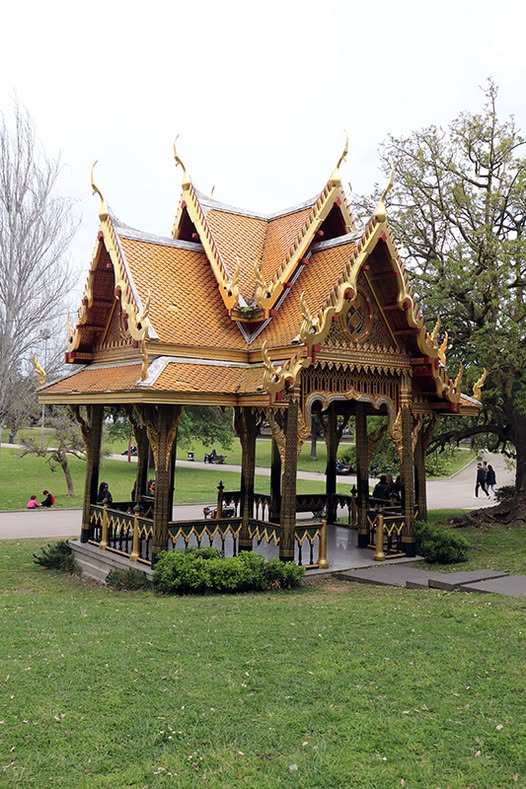
A striking and beautiful addition to Belém Garden is the Sala Thai, a pavilion gifted by Thailand to mark the 500th anniversary of diplomatic relations between Portugal and Thailand. Built entirely of teak wood and adorned with gold leaves and intricate stained-glass windows, the pavilion is a stunning example of traditional Thai craftsmanship.
The pavilion arrived in Lisbon by boat, following the same maritime route Portuguese explorers took centuries ago. With its roof resembling the scales of a dragon and the use of wooden joints instead of nails or screws, the Sala Thai is a testament to the enduring friendship between the two nations. It’s free to visit and remains a peaceful spot to relax in Belém Garden.
5. Pastéis de Cerveja: A Hidden Pastry Delight
While Pastéis de Belém are the star pastry of the area, there’s another treat in Belém that you shouldn’t miss – the Pastéis de Cerveja (beer pastries). This lesser-known pastry was created more than 70 years ago by a former Confeitaria Nacional employee. The twist? The dough is made with beer, which gives it a unique flavor and texture.
These pastries are less sweet than traditional Portuguese desserts, with a crispy crust and a creamy filling made with almonds, beer, and eggs. They are perfect for those looking for something a bit different. You can find them at a small bakery just down the street from Pastéis de Belém. Although the bakery is unassuming, the Pastéis de Cerveja have a loyal following – and the best part? You won’t have to wait in line to try them.
6. The Challenge: Explore and Share
Next time you find yourself in Belém, venture beyond the crowds and explore these hidden curiosities. Capture a picture and share your discoveries with us – whether it’s the Coat of Arms of Belém, the rhinoceros sculpture, or even a delightful Pastel de Cerveja. This is a great way to enrich your travel experience and share knowledge between locals and visitors. If you need any tips or recommendations, feel free to reach out!
Belém is full of surprises, and these stories add an extra layer of charm to an already captivating district. Enjoy your time in Belém, and happy exploring!
#Lisbon #Useful_Tips #Portugal_Unplugged
If you want this as a day out
I run private and small-group days in 100% electric vehicles. Related option:
Private day from Lisbon – custom or browse tours – check dates on the site.