It’s hard to imagine a hot summer day without a refreshing cold drink or a scoop of ice cream. Today, ice is something we take for granted, but centuries ago, it was a luxury reserved for royalty and the elite. Portugal’s fascination with ice dates back to the late 16th century, during the time of the Philippine Dynasty. This article will take you on a journey to explore the fascinating history of Portugal’s ancient ice production—from the remote mountain snow wells to the Royal Ice Factory.
The Origins of Ice in Portugal
The custom of enjoying chilled drinks and ice cream during Portugal’s sweltering summers began when King Philip III of Spain visited Portugal in 1619. To ensure the royal table was graced with ice, snow was transported all the way from the Serra da Estrela, the highest mountain range in mainland Portugal. However, without modern refrigeration techniques, a closer source of ice was needed for Lisbon’s growing demand. This led to the establishment of two historic ice production sites: Neveiros da Serra da Lousã and the Royal Ice Factory in Montejunto.
Neveiros da Serra da Lousã – Santo António das Neves
In the 18th and 19th centuries, the snowy peaks of the Lousã mountain range became the primary source of ice for the Portuguese royal court. Situated at an elevation of nearly 1,200 meters, this area features three remaining wells—originally there were seven—where snow was collected and compressed to create ice.
Local workers from the nearby village of Coentral were hired to gather snow during the winter months. They would climb to the mountain’s peak, fill the stone wells with snow, and compact it using wooden mallets. The snow was then covered with straw for insulation, preserving it until warmer months.
In spring and early summer, the frozen blocks were cut into large cubes, wrapped in straw and burlap, and transported down the mountain by ox carts to the banks of the Tagus River. From there, they were shipped to Lisbon’s Terreiro do Paço, supplying ice to the royal court, elite cafes, and eateries such as Martinho da Arcada, one of the city’s oldest cafes.
The Royal Ice Factory in Montejunto
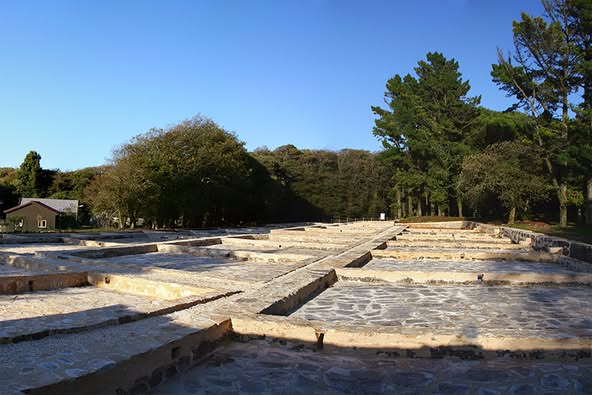
Sharing the responsibility of ice supply with the Lousã neveiros was the Royal Ice Factory at the top of the Montejunto mountain, a unique facility with a distinct ice production technique. Unlike other ice factories that used snow, Montejunto’s method relied on freezing water directly. Constructed in the late 18th century, this factory stands out as a marvel of early engineering.
Surrounded by a dense, shady forest, the factory’s setting was perfect for lowering temperatures. It contained 44 tanks that were filled with water from a series of wells. As the nighttime temperatures dropped, the water froze. A guard would then alert the local villagers by riding to Pragança and sounding a horn, prompting them to collect the ice. The workers transported the ice to three storage silos nearby, where it would remain frozen for months.
The Journey from Montejunto to Lisbon
When summer arrived, the ice was cut and prepared for the long journey to Lisbon. First, donkeys carried the ice down the mountain, followed by carts or ox carts to Vala do Carregado on the Tagus River. The ice then traveled by boat to Terreiro do Paço, a nighttime journey designed to take advantage of cooler temperatures.
Upon arrival, the ice was delivered to the Casa da Neve, which later became Lisbon’s iconic café, Martinho da Arcada. Another destination was the still-operating Café do Gelo in Rossio Square, known for serving cold treats to the city’s elite.
Engineering Marvels and End of an Era
The ice silos at Montejunto were marvels of design. They were built to retain the cold, with layers of stone to prevent humidity, drainage systems to reduce thawing risk, and even a small window at the top to release warm air caused by the workers’ breath. The nearby lime kiln, initially used for construction, later served as a disinfectant to keep the tanks and silos hygienic.
Despite the careful and elaborate process, the ice business faced a dramatic decline with the invention of the refrigerator in 1850. By the end of the 19th century, the ancient tradition of the neveiros—the skilled ice workers—had come to an end, and the once-bustling facilities were abandoned.
Visit These Historic Sites Today
Today, both the Neveiros da Serra da Lousã and the Royal Ice Factory in Montejunto are open for visitors, allowing a glimpse into a fascinating chapter of Portugal’s past. These monuments stand as a reminder of the ingenuity and effort that went into keeping the royal court cool during hot summers, long before the convenience of modern refrigeration.
So next time you enjoy a refreshing cold drink or ice cream on a warm day, remember the ancient traditions that paved the way for such simple pleasures!
Plan a visit, step back in time, and explore these hidden gems of Portugal’s culinary and cultural history.
#Lisbon #Useful_Tips #Portugal_Unplugged
If you want this as a day out
I run private and small-group days in 100% electric vehicles. Related option:
Custom private day – ask if you want this on a tour – check dates on the site.